Lubricant Storage & Handling: Small Mistakes That Can Cost Your Equipment
Choosing the right lubricant is important – but what happens to it after it arrives at your workshop, farm or site matters too.
Lubricants can be exposed to contamination during storage, transfer and dispensing, particularly in environments where dust, dirt and moisture are part of everyday operations.
A few simple storage and handling practices can help protect lubricant quality and, in turn, the machinery and equipment it is there to protect.
Keep Lubricants Clean and Sealed
One of the biggest risks to stored lubricants is contamination.
Dust, dirt, water and other foreign materials can enter containers through open lids, damaged seals, dirty transfer equipment or poor storage conditions.
Where possible, lubricants should be kept sealed until required and stored in a clean, dry area away from unnecessary exposure to the elements.
For drums stored outside or in harsher environments, extra care should be taken to prevent water and contaminants entering through openings or around bungs.
Use Clean, Dedicated Dispensing Equipment
The journey from the drum to the machine is another opportunity for contamination.
Pumps, hoses, funnels and transfer containers should be kept clean and protected when they’re not being used.
Where practical, using dedicated dispensing equipment for different lubricants can also help prevent cross-contamination.
Mixing products isn’t always harmless. Different lubricants can use different base oils and additive systems, and compatibility shouldn’t be assumed simply because two products appear similar.
Clearly identifying pumps, containers and dispensing equipment can make a big difference – particularly in busy workshops or operations where several lubricant grades are stored.
Label Everything Clearly
It sounds simple, but good labelling can prevent expensive mistakes.
Lubricants should be clearly identified by product and grade, with labels remaining visible and legible throughout storage.
The same principle applies to dispensing equipment.
Colour coding or labelling pumps, reels and transfer containers can make it much easier for staff to identify which equipment belongs with each lubricant and reduce the chance of the wrong product ending up in a machine.
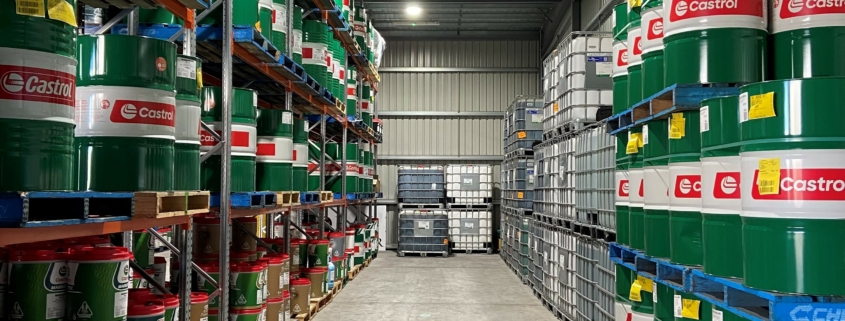
Think About Where Your Drums Are Stored
A drum tucked beside the workshop might be convenient, but it isn’t necessarily the best place for long-term storage.
Where possible, lubricants should be protected from rain, excessive dirt and large temperature fluctuations.
Storage areas should also be organised so older stock can be identified and used appropriately rather than containers disappearing to the back of the shed indefinitely.
Good lubricant storage doesn’t need to be complicated. A clean, organised area with properly sealed and identified products is already a significant improvement over drums and containers scattered around a site.
Don’t Forget Bulk Lubricant Systems
The same principles apply when lubricants are stored in larger quantities.
Bulk tanks, pumps, hoses, reels and dispensing points all form part of the lubrication system and should be kept clean and maintained appropriately.
Keeping fill points and connections protected from contamination is particularly important. Dirt introduced during a transfer can ultimately find its way into the equipment the lubricant is intended to protect.
A well-planned bulk lubricant setup can also make day-to-day handling easier, helping businesses store and dispense commonly used products more efficiently.
Check Before You Top Up
Another common trap is assuming that because an oil or grease looks similar, it can safely be added to what’s already there.
Before topping up equipment, check the product and specification recommended by the equipment manufacturer.
If you’re changing lubricant products or aren’t sure what’s currently being used, check compatibility before mixing them.
The few minutes spent confirming the correct product can be considerably easier than dealing with a lubrication-related problem later.
Good Lubrication Starts Before the Oil Reaches the Machine
Lubricant quality isn’t only about choosing a good product.
How that product is stored, transferred and dispensed can all influence what eventually reaches your equipment.
Keeping lubricants sealed, using clean dispensing equipment, clearly identifying products and protecting storage areas from contamination are relatively simple practices that can help support equipment reliability.
At Global Lubricant Distributors, we supply lubricants and fluid handling equipment for businesses across transport, agriculture, automotive, earthmoving, workshops and industry.
If you’re unsure about the right lubricant for your equipment or want to improve the way oils and greases are stored and dispensed across your operation, speak with the GLD team.
Leading Brands. One Trusted Partner.